
Summer in Victoria can bring high UV levels and periods of extreme heat. A little planning helps reduce the risk of dehydration, heat illness and sun damage—especially for older people, young children, pregnant people and anyone with a chronic health condition.
Check the forecast and change the plan
Watch Bureau of Meteorology forecasts and heatwave warnings. Move outdoor activity to the coolest part of the day, shorten it or choose an indoor alternative when conditions are extreme. Never leave a child, older person or pet alone in a parked car.
Keep cool and drink regularly
Use air conditioning or a fan, close blinds against direct sun, wear loose light clothing and cool the skin with a damp cloth or shower. Keep drinking water before you feel thirsty and take a bottle when leaving home. If a doctor has told you to restrict fluids, ask how to manage hot days safely.
Use several forms of sun protection
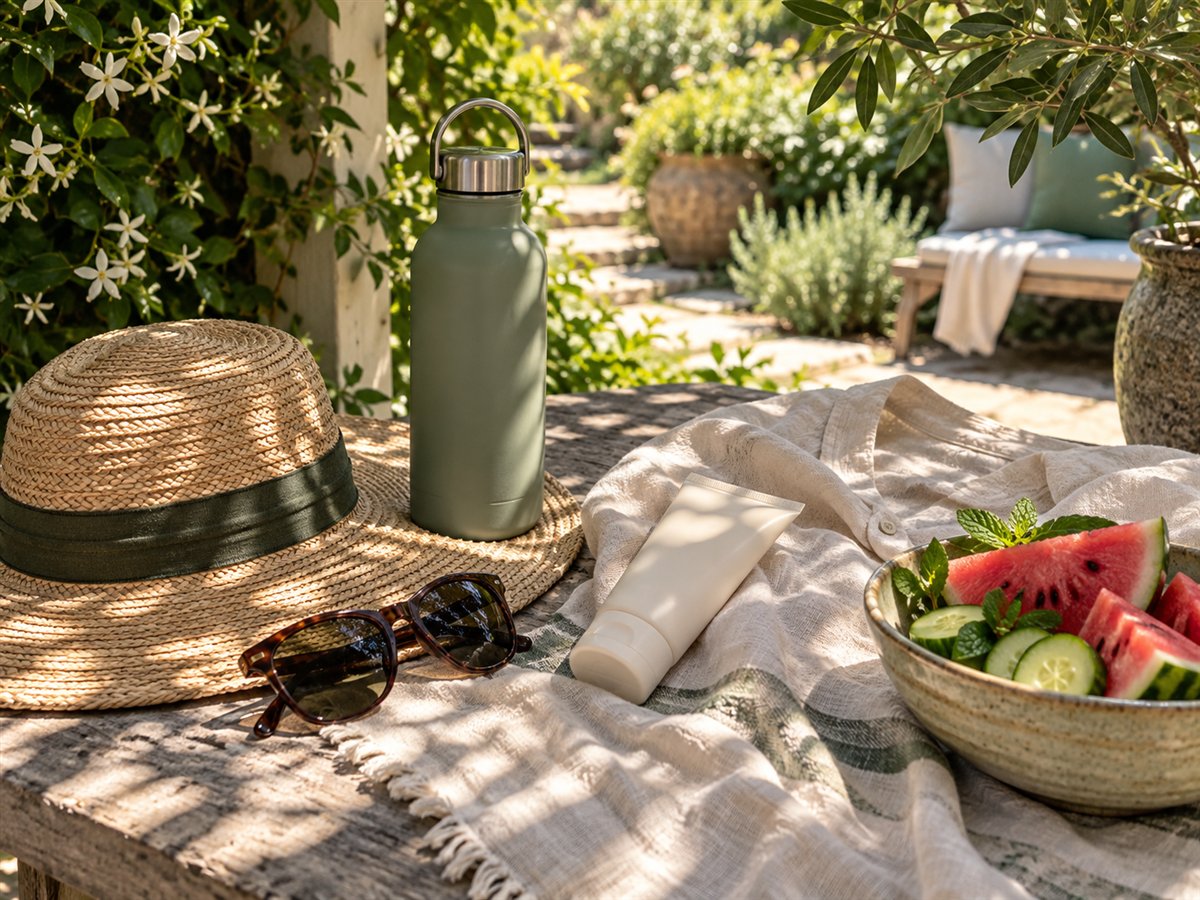
UV radiation can be high even when the temperature feels mild. When the UV Index is 3 or above, Cancer Council recommends protective clothing, a broad-brimmed hat, shade, sunglasses and broad-spectrum, water-resistant SPF 50 or 50+ sunscreen. Apply sunscreen as directed and do not rely on it alone.
Recognise heat illness
Headache, weakness, nausea, heavy sweating, dizziness and muscle cramps can be signs of heat exhaustion. Stop activity, move somewhere cool, loosen clothing and cool the body. Heatstroke is a medical emergency. Call 000 for confusion, fainting, seizures, inability to drink or a very high body temperature.
Check on other people
Call relatives, friends or neighbours who live alone or may have difficulty keeping cool. Help them reach an air-conditioned place or arrange practical support when it is safe to do so.
General information only. Seek individual medical advice about medicines, fluid restriction or health conditions during hot weather.