
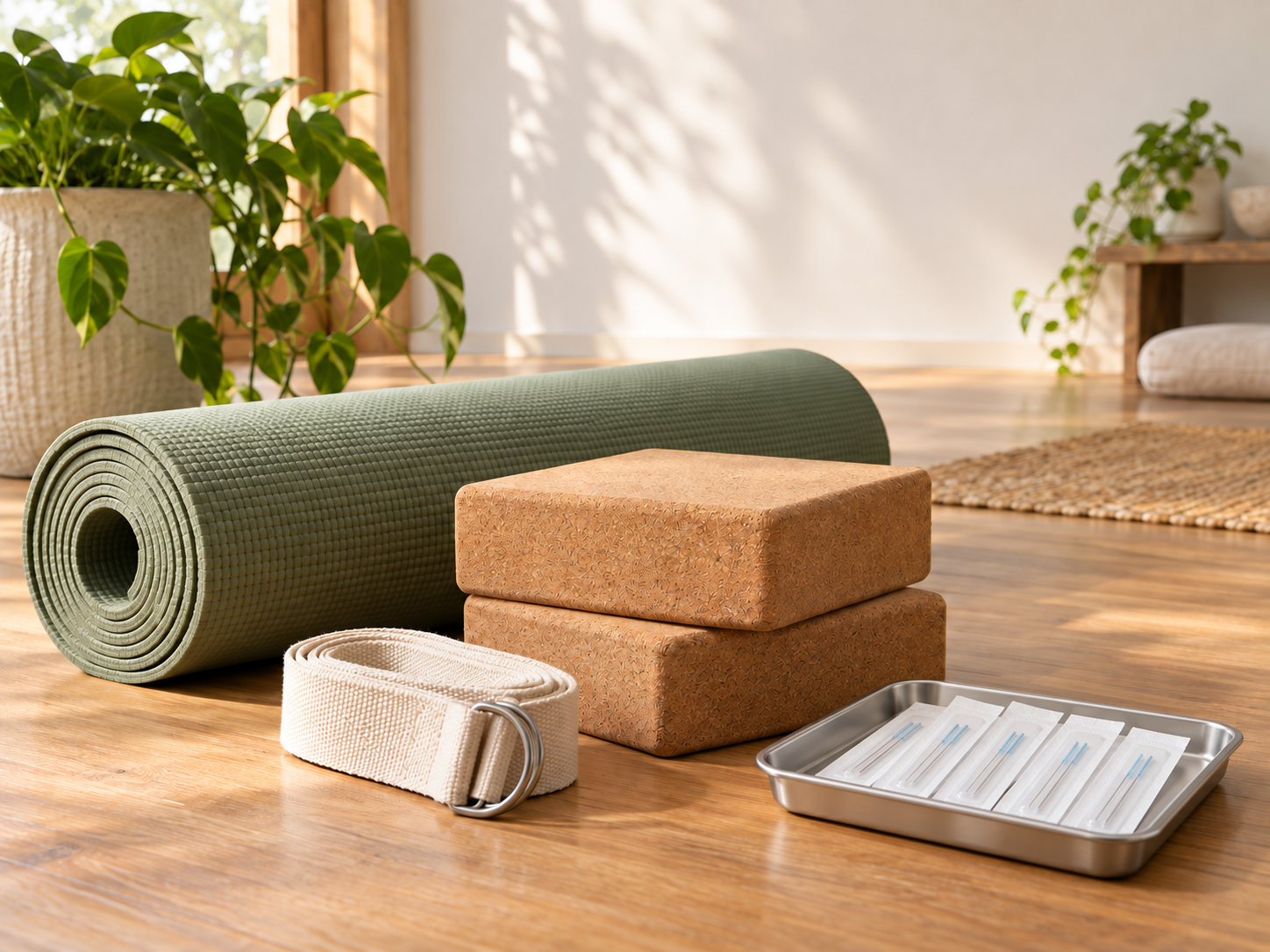

Yoga and acupuncture come from different traditions and have different roles. Yoga combines movement, breathing and attention. Acupuncture is a complementary treatment using fine, sterile needles. Some people choose both as parts of a broader wellbeing routine, but one is not required for the other to be beneficial.
What yoga can offer
A regular yoga practice may support flexibility, strength, balance, posture and body awareness. The pace ranges from gentle and restorative to physically demanding, so the right class depends on experience, health and fitness.
Start with a qualified instructor, explain any injuries or medical conditions and ask for modifications. A pose should not cause sharp or worsening pain. Stop and seek advice if movement causes dizziness, chest pain, unusual breathlessness, numbness or significant discomfort.
Where acupuncture may fit
People sometimes book acupuncture for pain, muscle tension, headaches, sleep difficulties or a general sense of relaxation. The evidence differs by condition, and acupuncture should not be described as a way to “reprogram” balance, rapidly heal an injury or guarantee a faster return to exercise.
If pain or injury is keeping you away from yoga, diagnosis and rehabilitation come first. A GP, physiotherapist or other appropriate health professional can assess the problem and advise when and how to return. Acupuncture may be considered alongside that plan when suitable, but it should not mask pain so that an injured area is loaded too soon.
Planning the two safely
- Tell both practitioners about injuries, pregnancy, health conditions and medicines.
- Choose a registered acupuncturist who uses single-use sterile needles.
- Avoid a demanding yoga session if acupuncture leaves you light-headed, sleepy or sore.
- Keep hydration, rest and gradual progression at the centre of your routine.
- Review whether each activity is helping instead of assuming that more treatment is always better.
A complementary rhythm
For some people, yoga provides active practice through movement and breath, while an acupuncture appointment offers a quieter period of rest. That contrast may feel useful, but the experience is personal rather than a promised clinical effect.
The most sustainable routine is one that matches your goals, feels manageable and can be adjusted when your body or circumstances change.