
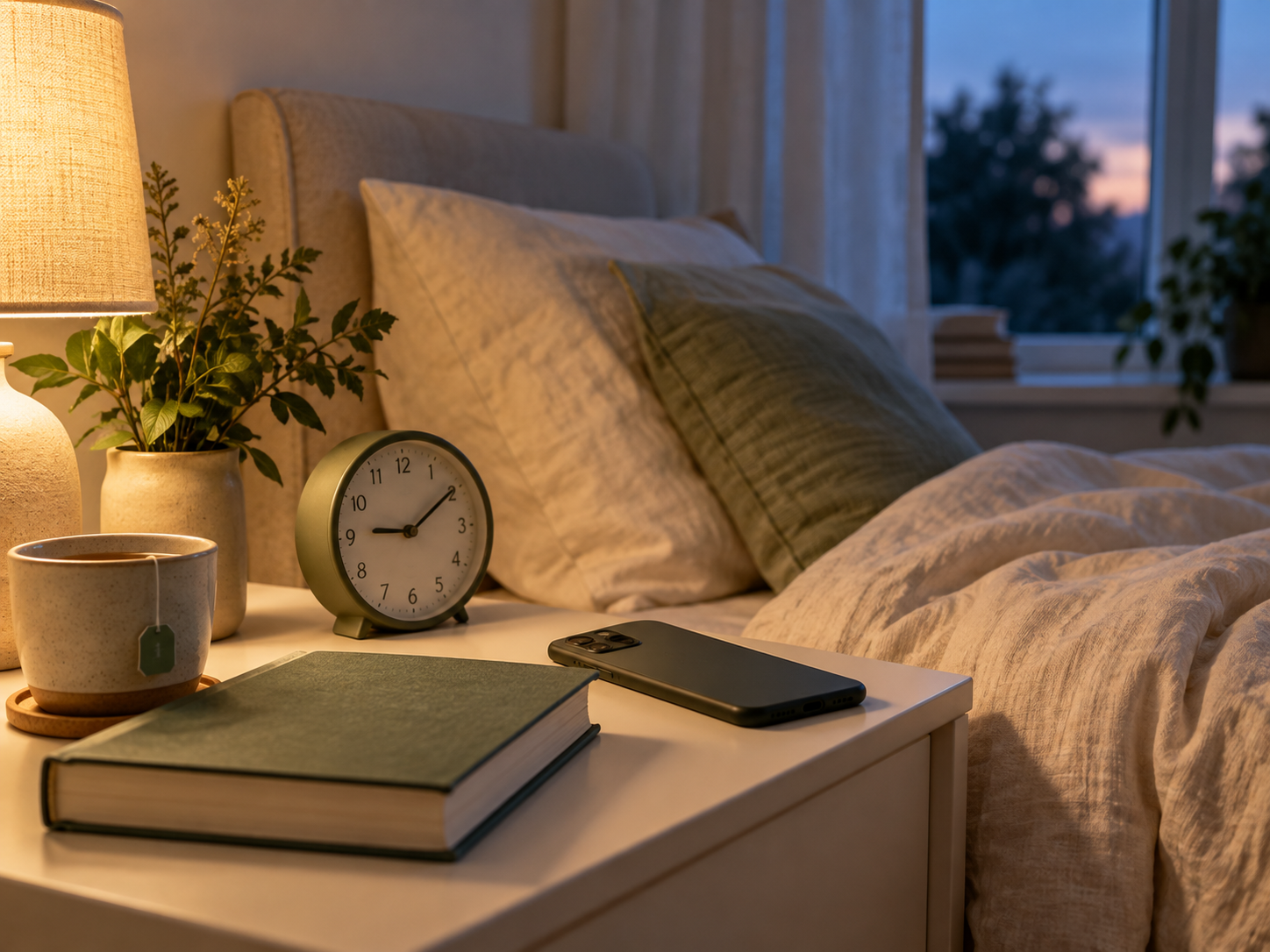

Phones, tablets, computers and televisions are part of everyday life, but using them close to bedtime can make it harder to settle down and sleep well. The effect is not only about blue light—the content, timing and notifications can also keep the mind alert.
Light can shift the body clock
Light is one of the signals that helps regulate the circadian rhythm, the internal cycle that influences when we feel awake and sleepy. Bright light in the evening, including light from screens, may delay the natural rise in melatonin and make falling asleep more difficult. Screen brightness, viewing distance and the length of use all affect exposure.
Content can keep the brain engaged
A stimulating program, work email, game or social-media conversation can keep your attention active when the body needs time to wind down. Disturbing news or online conflict may also increase worry. Even with a blue-light filter, engaging content can still delay bedtime.
Notifications can interrupt sleep
Sounds, vibration and light from a phone beside the bed can disturb sleep. If you use your phone as an alarm, switch on a sleep or do-not-disturb mode and allow only essential contacts. Placing the device beyond arm’s reach may also reduce the temptation to check it during the night.
Create a quieter final hour
- Choose a regular time to finish work, news and social media.
- Dim room lighting and reduce screen brightness during the evening.
- Keep the bedroom dark, quiet and comfortably cool.
- Replace some screen time with reading, gentle stretching, breathing or quiet music.
- Keep a consistent sleep and wake time when possible.
You do not need a perfect routine. Start with a realistic screen-free period—perhaps 30 minutes—and adjust it according to how you sleep. If insomnia, loud snoring, breathing pauses, severe daytime sleepiness or other sleep problems continue, speak with your GP.
General information only. This article does not replace medical advice, diagnosis or treatment.