
Thirst can feel less noticeable in cool weather, but the body still loses water through breathing, urine, indoor heating and physical activity. Winter hydration is usually about simple routines rather than forcing a fixed number of litres.
Let water remain the main drink
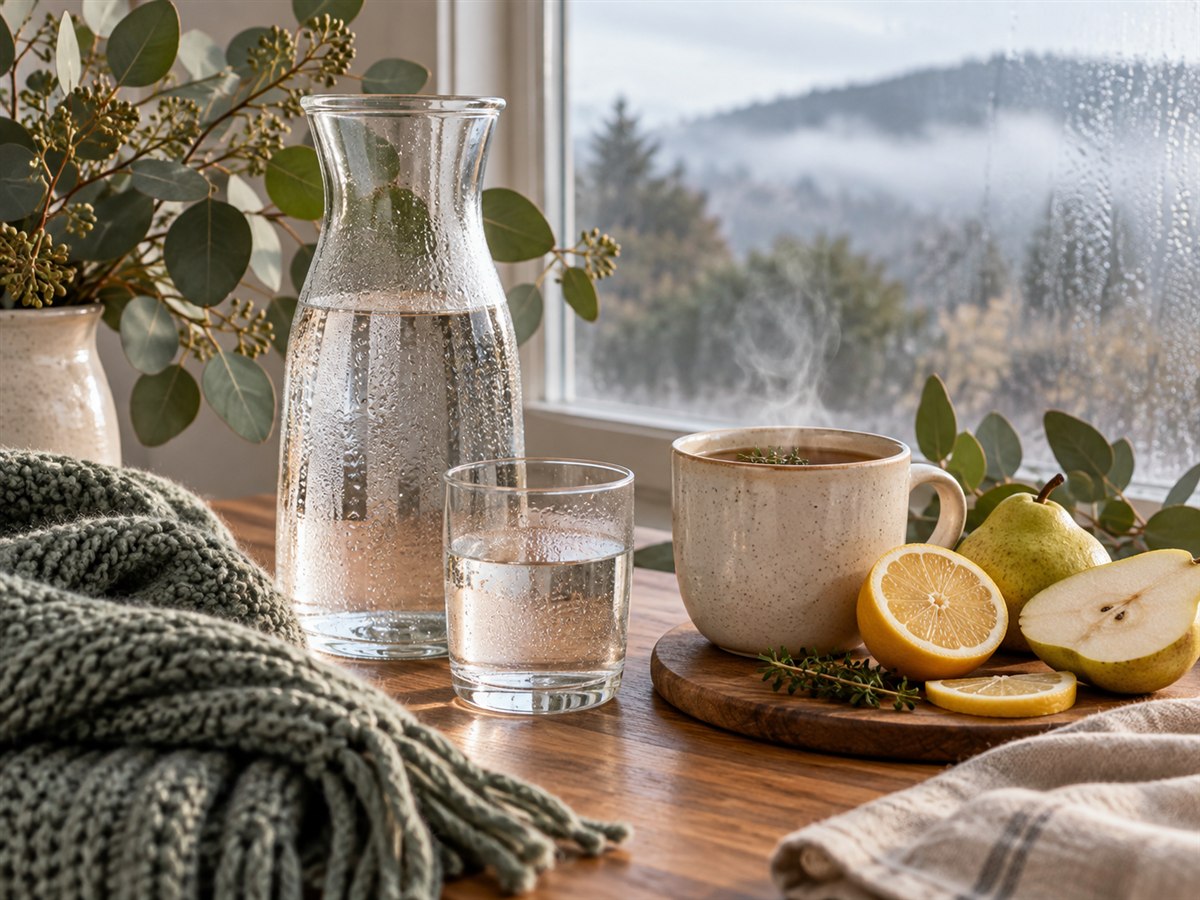
Tap water is an inexpensive everyday choice in Australia. Milk, soup, tea and coffee also contribute fluid, although caffeine affects people differently and sugary drinks can add unnecessary kilojoules. Warm water or unsweetened herbal tea may be more appealing on cold days.
Use routine cues
- Have a drink with meals and after waking.
- Keep water visible at a desk or in a bag.
- Drink before, during and after exercise, including indoor activity.
- Offer drinks regularly to older adults and children who may not ask.
Notice possible dehydration
Thirst, dry mouth, headache, light-headedness, tiredness, dark strong-smelling urine or passing less urine can be warning signs. Urine colour is only a rough guide because foods, vitamins and medicines can change it.
Needs vary
Fluid needs change with body size, activity, pregnancy, breastfeeding, fever, vomiting, diarrhoea, medicines and medical conditions. If a clinician has asked you to restrict fluid because of heart, kidney or another condition, follow that plan and ask how illness or exercise should be handled.
Seek advice when drinking is difficult
Contact a health professional if dehydration symptoms persist, you cannot keep fluids down, or swallowing is difficult. Confusion, fainting, very little urine or severe weakness can require urgent care.
General information only. Individual fluid advice may be different for some health conditions.