
Your home does not need to look perfect to feel supportive. A few practical changes can make everyday routines easier and create small opportunities to pause, rest and reconnect.
Start with one useful area
Choose a surface, chair or corner that affects your day. Clear what no longer belongs there and give frequently used items a simple home. Working on one small area is more manageable than trying to reorganise everything at once.
Use light and fresh air thoughtfully
Open curtains during the day and ventilate when outdoor air quality and weather make it appropriate. If smoke, pollen or pollution is present, follow local health advice rather than assuming that open windows are always best. House plants can be enjoyable, but they are not a substitute for adequate ventilation or an air cleaner when one is medically recommended.
Create a place to slow down
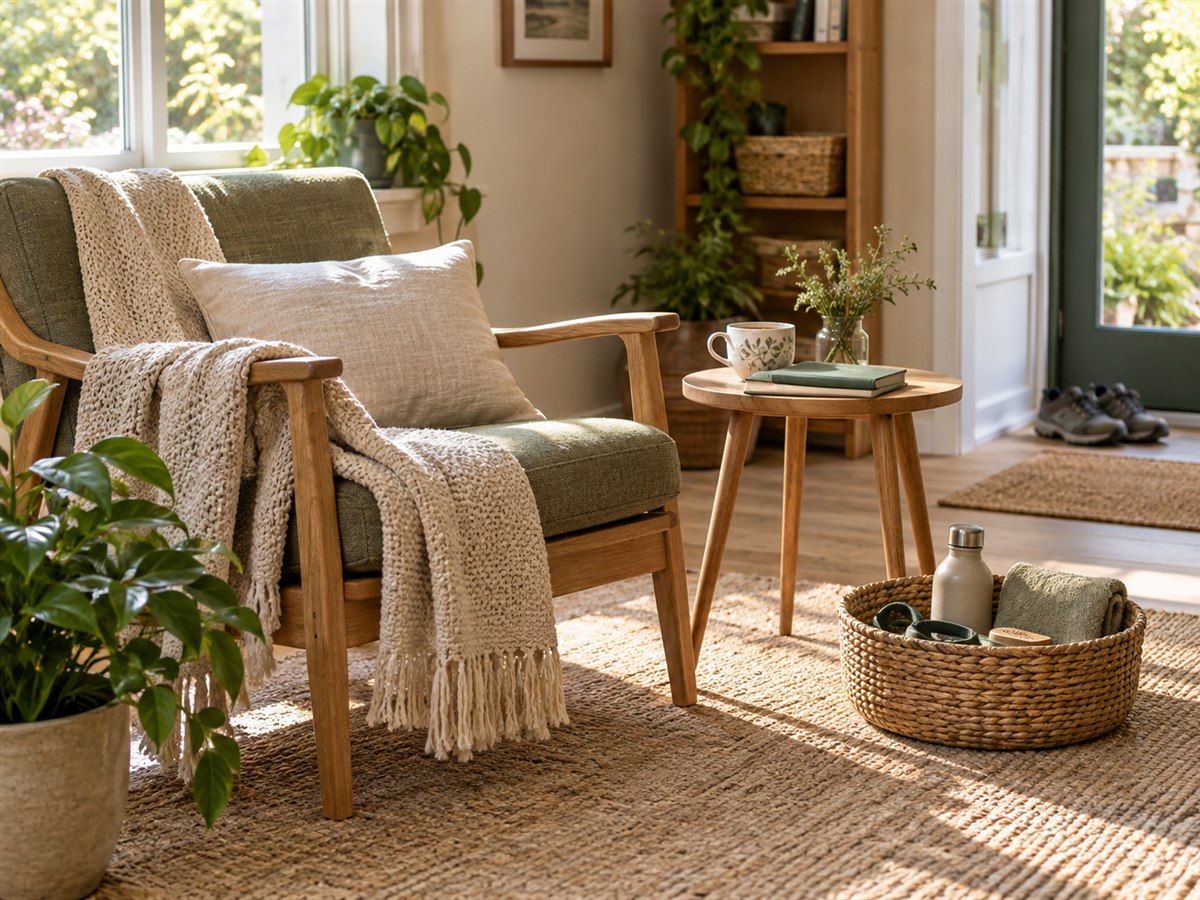
Set aside a comfortable spot for a quiet activity: reading, stretching, tea, music or a few minutes of slow breathing. It can be as simple as a chair with a lamp. The value comes from using it regularly, not from buying special equipment.
Reduce friction around healthy routines
Place walking shoes where you see them, keep water within reach and make the bedroom easier to wind down in at night. Small environmental cues can help a behaviour become more automatic through repetition.
Make calm practical
Try a brief reset at the same time each day: put away five items, prepare tomorrow’s essentials or take three slow, comfortable breaths. If focusing on breathing makes you feel more anxious or dizzy, stop and choose another grounding activity.
When stress needs more support
A calmer room cannot solve ongoing anxiety, low mood, unsafe housing or overwhelming stress. Speak with your GP or a mental health professional if stress is persistent, affects sleep or daily life, or feels difficult to manage.
Further information
- Healthdirect: relaxation techniques for stress relief
- Healthdirect: creating healthy habits
- Better Health Channel: breathing to reduce stress
This article provides general information and is not a substitute for individual health advice.