
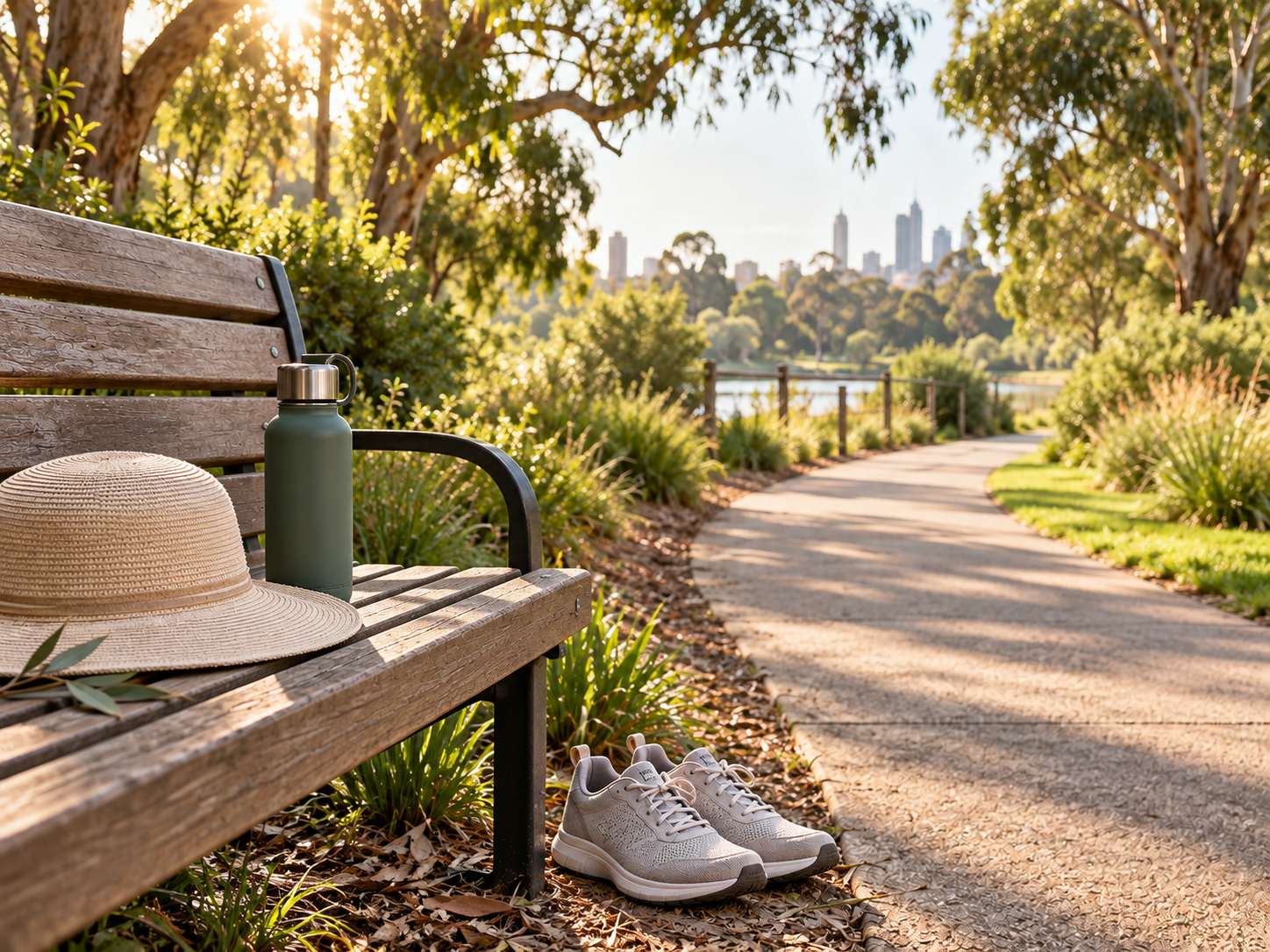

Walking is free, adaptable and easy to fit into daily life. It can support heart and lung fitness, muscle strength, bone health, balance and emotional wellbeing—and even short walks can be a useful place to begin.
Why walking counts
Walking is a weight-bearing activity that uses large muscle groups without requiring a gym or specialised equipment. Regular walking can contribute to the movement recommended in Australia’s 24-hour guidelines, which encourage adults to be active on most days, include strength work and break up long periods of sitting.
Start from where you are
If you are not currently active, begin with a pace and distance that feel manageable. A five- or ten-minute walk still counts. Add time, distance or pace gradually as your comfort and fitness improve. At a moderate pace you should usually be able to talk, although singing would feel difficult.
Make walking easier to repeat
- Choose a regular time or link the walk to an existing habit.
- Walk to a nearby shop or get off public transport one stop earlier.
- Invite a friend or vary your route to keep it enjoyable.
- Wear comfortable footwear and dress for the weather.
- Carry water on longer walks and use shade, a hat and sunscreen in hot conditions.
Pay attention to safety
Choose well-lit routes and surfaces that suit your balance and mobility. Stop and seek urgent help for chest pain, severe breathlessness, faintness or sudden weakness. Speak with your GP or allied health professional before increasing activity if you have a chronic condition, recent injury, significant symptoms or have been inactive for a long time.
The most useful walking plan is one you can sustain. Consistency matters more than speed, and several shorter walks can be easier to maintain than one long session.
General information only. This article does not replace medical advice.