
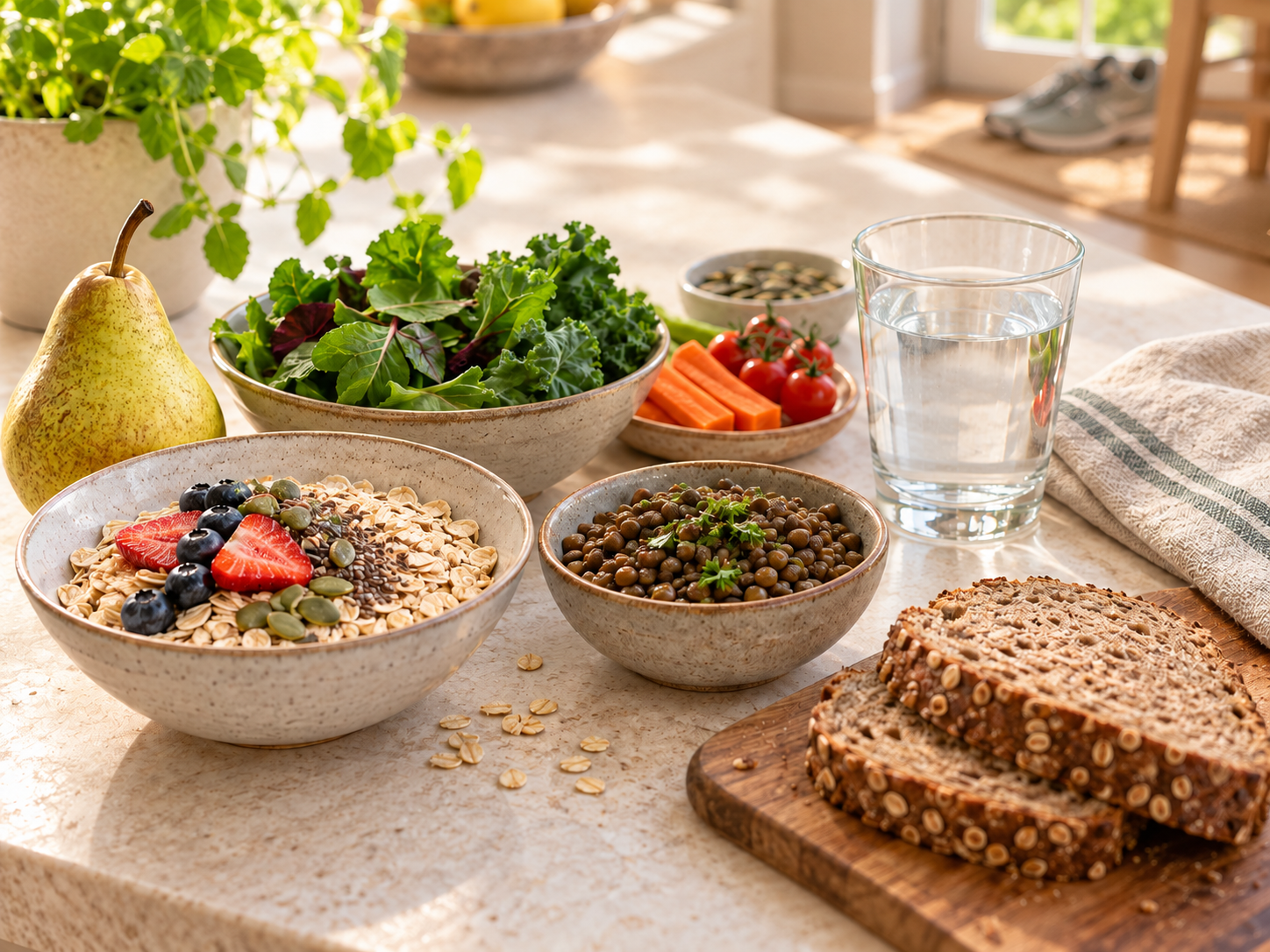

Digestive symptoms are common, but there is no single “gut reset” that suits everyone. Regular meals, varied plant foods, enough fluid and movement can support digestion, while ongoing symptoms deserve proper assessment.
Increase fibre gradually
Vegetables, fruit, legumes, nuts, seeds and wholegrain foods provide different types of fibre. Fibre supports bowel regularity and feeds many of the microorganisms that live in the gut. Add it gradually and drink enough fluid; a sudden large increase can worsen gas or bloating.
Use regular meals and unhurried eating
A predictable meal pattern can make symptoms easier to observe. Sit down when possible, chew comfortably and notice whether very large meals, alcohol, high-fat foods or particular ingredients repeatedly trigger symptoms. Avoid eliminating whole food groups without advice from an accredited practising dietitian.
Make water and movement routine
Water assists digestion and helps fibre soften stool. Needs vary with weather, activity, pregnancy, medicines and health conditions. Regular movement such as walking can stimulate bowel activity and may also support sleep and stress management.
Treat supplements and herbs as active products
Probiotics, herbal formulas and digestive supplements are not interchangeable, and evidence depends on the product and condition. They can cause side effects or interact with medicines. Discuss them with a GP, pharmacist or appropriately qualified practitioner, especially during pregnancy, before surgery or with liver, kidney or immune conditions.
Know when symptoms need assessment
See a health professional for persistent or worsening pain, repeated vomiting, difficulty swallowing, ongoing diarrhoea or constipation, unexplained weight loss, anaemia, fever, black stool or blood in the stool. Seek urgent help for severe pain, fainting, vomiting blood or heavy rectal bleeding.
General information only. Digestive symptoms can have many causes and this article does not provide a diagnosis.