
“A year long like spring in all seasons”
「一年長作四時春」
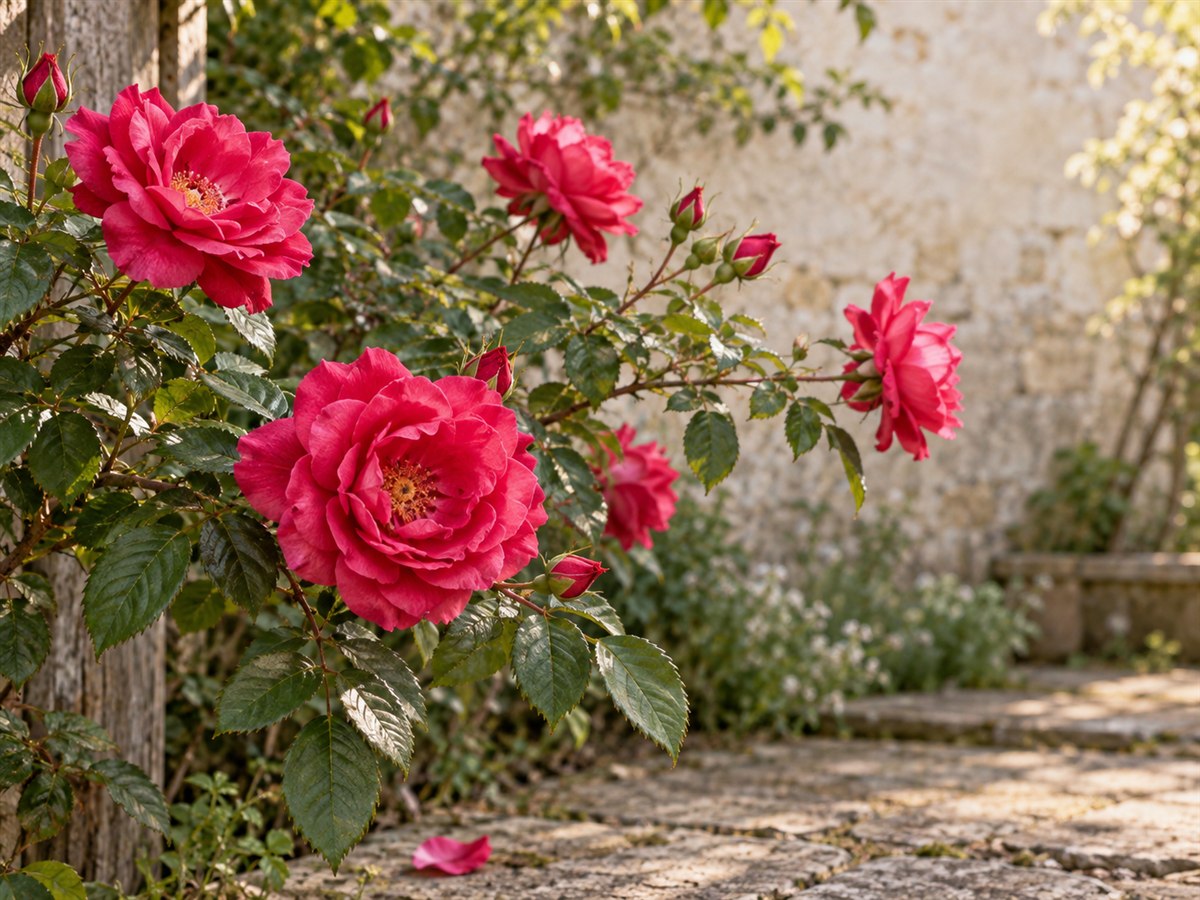
Rosa chinensis—known as the China rose or Chinese rose—is admired for flowers that can appear repeatedly across a long growing season. Its enduring colour helps explain poetic names such as “eternal spring” and its place in Chinese gardens, painting and writing.
A rose with a long cultural story
The accepted botanical name is Rosa chinensis Jacq., a member of the Rosaceae family. Royal Botanic Gardens, Kew records its native range in north-central and south-central China and describes it as a temperate shrub. Forms related to China roses also contributed repeat-flowering characteristics to many cultivated garden roses.
Historical names and verses often blur the line between a wild species, cultivated varieties and later hybrids. For that reason, a garden rose should not be identified for medicinal or culinary use from a photograph or common name alone.
月季花 in traditional practice
The flower known as 月季花 (yuè jì huā) appears in Chinese materia medica and pharmacopoeial naming sources. Traditional descriptions associate it with menstrual and circulatory patterns. These descriptions belong to a traditional diagnostic system; they are not proof that the flower safely or effectively treats a modern medical diagnosis.
The original version of this article included a detailed decoction and directions for menstrual symptoms. Those instructions have been removed. Menstrual changes, pelvic pain, unusual bleeding or missed periods can have many causes and should be assessed appropriately. A formula containing several herbs may also interact with medicines or be unsuitable during pregnancy, breastfeeding, before surgery or with particular health conditions.
Enjoy the plant safely
- Do not make tea or medicine from an ornamental rose unless its identity, growing conditions and suitability for ingestion are confirmed.
- Garden plants may have been treated with pesticides or other products not intended for food crops.
- Do not use petals or herbal preparations as a substitute for assessment of persistent pain, abnormal bleeding or other symptoms.
- If Chinese herbal medicine is being considered, consult a suitably qualified practitioner and tell your GP and pharmacist about all medicines and supplements you use.
Rosa chinensis is best introduced here as a plant with botanical, horticultural and cultural significance. Its poetry and history can be appreciated without turning a traditional reference into a do-it-yourself prescription.