Your treatment plan starts with a conversation about your health, concerns and goals. We explain the options and decide together what is suitable for you.
Acupuncture
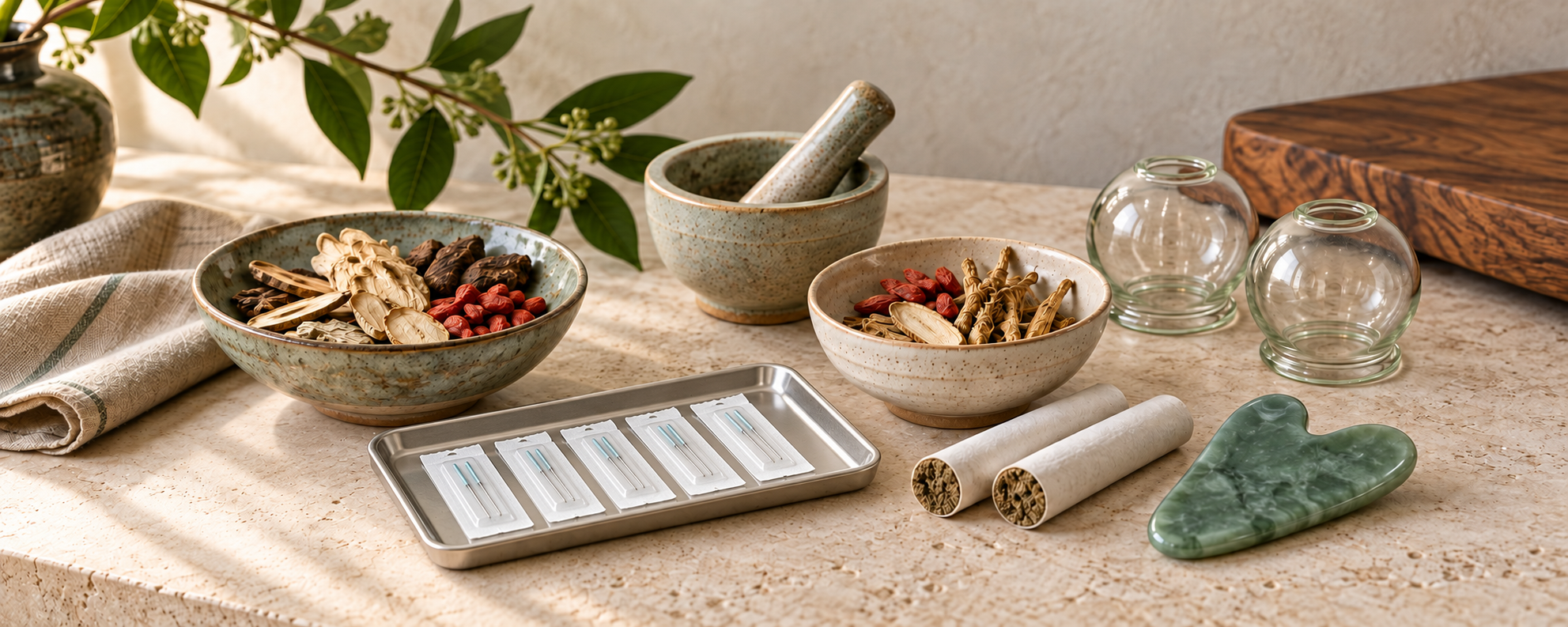
Fine, sterile, single-use needles are placed at selected points on the body. Point selection and the number of treatments depend on your individual assessment.
Chinese herbal medicine
Herbal prescriptions combine plant-based and other traditional ingredients selected after an individual assessment. Preparations may include granules, powders or pills. Herbal medicines can interact with other medicines and supplements.
Cupping
Purpose-made cups create suction on selected areas of the body. Cupping commonly leaves temporary circular marks; we explain the expected skin response and aftercare before treatment.
Moxibustion
This traditional technique uses the controlled warmth of dried mugwort near acupuncture points or areas of the body. We discuss comfort, precautions and suitability before use.
Gua Sha
A smooth-edged tool is applied to the skin with controlled strokes. Temporary redness or marks can occur, and we explain what to expect beforehand.
Concerns people discuss with us
People visit with concerns including persistent pain, digestive symptoms, stress and sleep difficulties, headaches, skin or respiratory concerns, and women’s health.
Suitability and evidence vary by condition and person. We discuss the limits of treatment and recommend medical assessment where appropriate.
Before treatment
Bring a current list of medicines and supplements. Tell your practitioner about allergies, medical conditions, pregnancy or breastfeeding, blood-thinning medicines, bleeding disorders, or previous faintness during needling.
We explain the proposed treatment, relevant precautions and aftercare, and welcome your questions. Chinese medicine should not delay medical assessment or replace prescribed treatment.